
📅 Latest Update — Anthony Albanese:
Anthony Albanese led the Australian Labor Party to a landslide re-election victory on May 3, 2025, winning a historic second term as Prime Minister with a significantly increased parliamentary majority.
Anthony Albanese — 31st Prime Minister of Australia (since May 23, 2022)
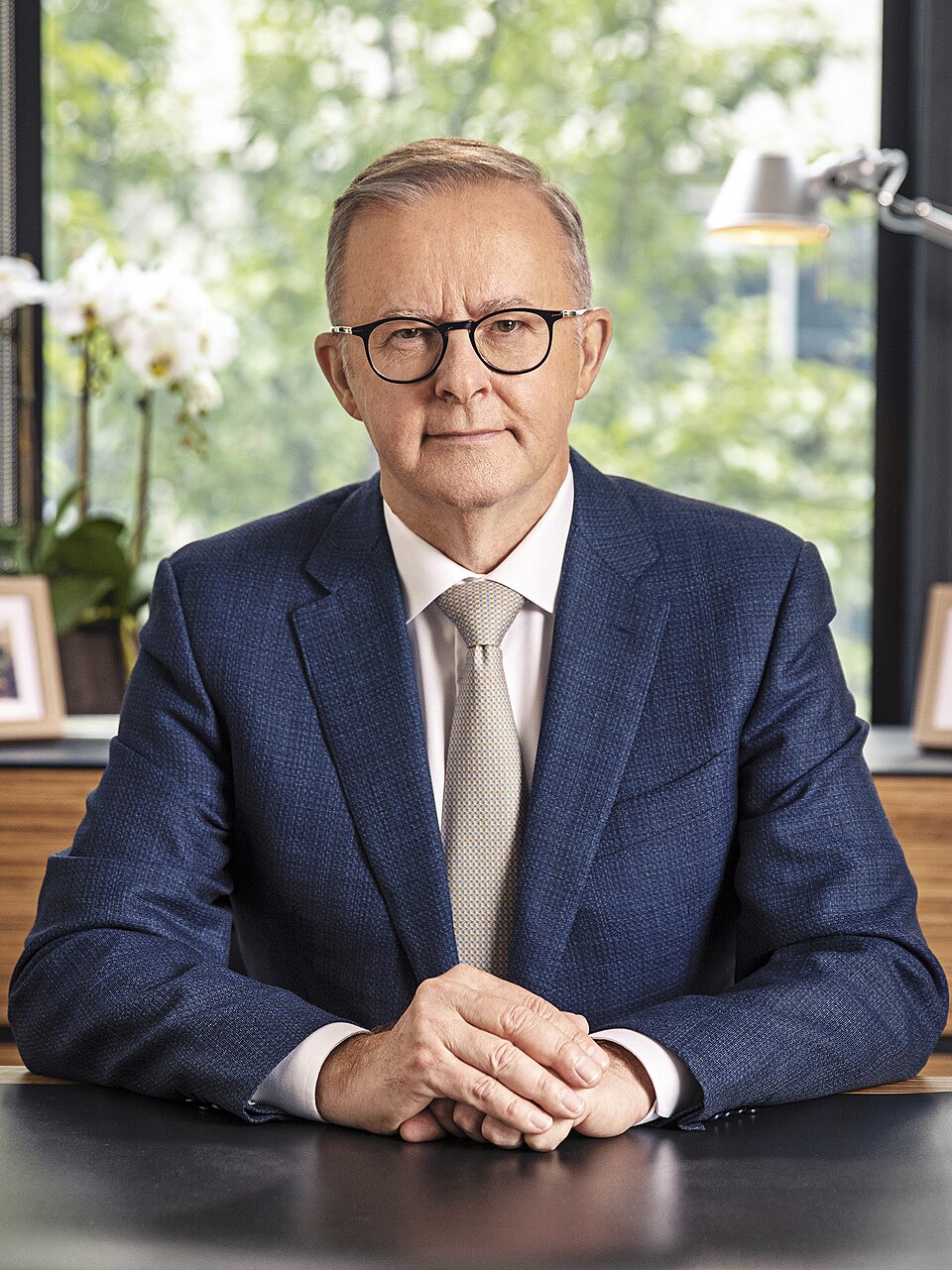
Anthony Norman Albanese (born 2 March 1963) is an Australian politician serving as the 31st Prime Minister of Australia and Leader of the Australian Labor Party since 2019. He has been the Member of Parliament for the New South Wales electorate of Grayndler since 1996, making him one of Australia’s longest-serving MPs.
Albanese grew up in public housing in the Sydney suburb of Camperdown, raised by his mother after his parents separated. He attended St Mary’s Cathedral College and went on to study economics at the University of Sydney. He joined the Labor Party in 1979 at the age of 16 and has remained a committed left-wing Labor figure throughout his career.
Following Labor’s victory at the 2007 federal election, Albanese served in the Rudd and Gillard governments, including as Minister for Infrastructure and Transport and Leader of the House. He was briefly Deputy Prime Minister in 2013. After Labor’s unexpected defeat at the 2019 election, he was elected unopposed as Labor leader.
At the May 2022 federal election, Albanese led Labor to victory over the incumbent Scott Morrison–led Coalition, ending nine years of conservative government. He was sworn in as Prime Minister on 23 May 2022, becoming the first Australian Prime Minister of Italian descent. His first term focused on climate policy, cost-of-living relief, indigenous reconciliation, and strengthening the AUKUS security partnership.
At the federal election held on 3 May 2025, Albanese secured a second consecutive term in a landslide victory over Peter Dutton’s Liberal Party, with Labor winning one of its largest parliamentary majorities in history. Dutton lost his own seat. Albanese was re-appointed as the 31st Prime Minister and continues to lead Australia into 2026.
Scott Morrison — 30th Prime Minister of Australia (August 24, 2018 – May 23, 2022)

Scott John Morrison (born 13 May 1968) is a former Australian politician who served as the 30th Prime Minister of Australia and Leader of the Liberal Party from August 2018 to May 2022. He represented the New South Wales electorate of Cook in the House of Representatives from 2007 until his retirement from parliament in February 2024.
Morrison was born and raised in Bronte, a suburb of Sydney. His father was a police commander and later Mayor of Waverley. He studied economic geography at the University of New South Wales and worked in tourism and property consulting before entering politics.
Morrison rose through the Liberal Party holding senior cabinet positions including Minister for Immigration and Border Protection under Tony Abbott (2013–2014) and Treasurer under Malcolm Turnbull (2015–2018). He became Prime Minister on 24 August 2018 following a Liberal leadership spill that removed Malcolm Turnbull. His government unexpectedly won the May 2019 federal election, defeating Labor leader Bill Shorten.
His term was dominated by the 2019–20 Black Summer bushfire crisis and the COVID-19 pandemic. He lost the 2022 federal election to Anthony Albanese, resigned as Liberal leader, and retired from parliament in February 2024.
Malcolm Turnbull — 29th Prime Minister of Australia (September 15, 2015 – August 24, 2018)
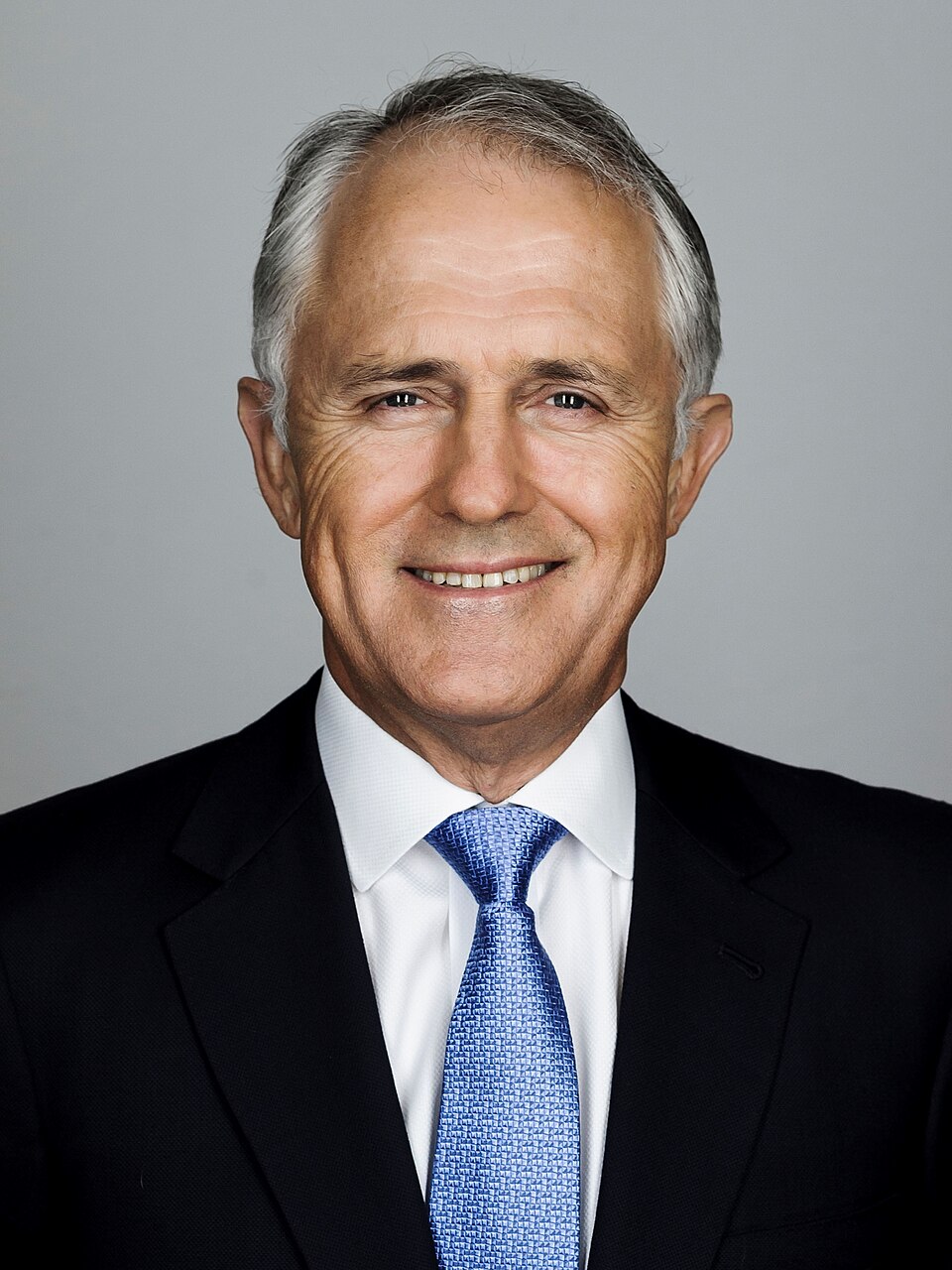
Malcolm Bligh Turnbull (born 24 October 1954) is an Australian politician who has served as the Prime Minister of Australia and Leader of the Liberal Party since 2015, and as the Member of Parliament (MP) for Wentworth since 2004.
Turnbull attended Sydney Grammar School before going to the University of Sydney, where he received Bachelor of Arts and Bachelor of Laws degrees. He then attended Brasenose College, Oxford, as a Rhodes Scholar, where he attained a Bachelor of Civil Law degree. Before entering politics, Turnbull worked as a journalist, lawyer, investment banker and venture capitalist. In 1993, he became the chair of the Australian Republican Movement, serving in the position until 2000.
Briefly Minister for the Environment and Water in the Howard government in 2007, Turnbull was elected Leader of the Liberal Party in September 2008, becoming Leader of the Opposition. In November 2009, his support for the Carbon Pollution Reduction Scheme proposed by the Labor Government split the Liberal Party. In a ballot the following month, Turnbull lost the leadership to Tony Abbott by one vote. Initially intending to leave politics, Turnbull remained an MP and eventually became Minister for Communications in the Abbott Government in September 2013.
In September 2015, Turnbull challenged Abbott for the Liberal leadership, and won the subsequent ballot with 54 votes to Abbott’s 44. He succeeded Abbott as prime minister the following day and formed the Turnbull Government.
Turnbull is married to prominent businesswoman and former Lord Mayor of Sydney Lucy Turnbull AO, née Hughes. They were married on 22 March 1980 at Cumnor, Oxfordshire, near Oxford by a Church of England priest while Turnbull was attending the University of Oxford. They and their two children, Alex and Daisy, live in Sydney.
The use of Bligh as a male middle name is a tradition in the Turnbull family. It is Turnbull’s middle name as well as that of his son. One of Turnbull’s ancestors was colonist John Turnbull, who named his youngest son William Bligh Turnbull in honour of deposed Governor William Bligh at the time of the Rum Rebellion.
Turnbull and Lucy became grandparents in September 2013, when their daughter Daisy gave birth to a boy named Jack Alexander Turnbull-Brown.
Source: https://en.wikipedia.org/wiki/Malcolm_Turnbull
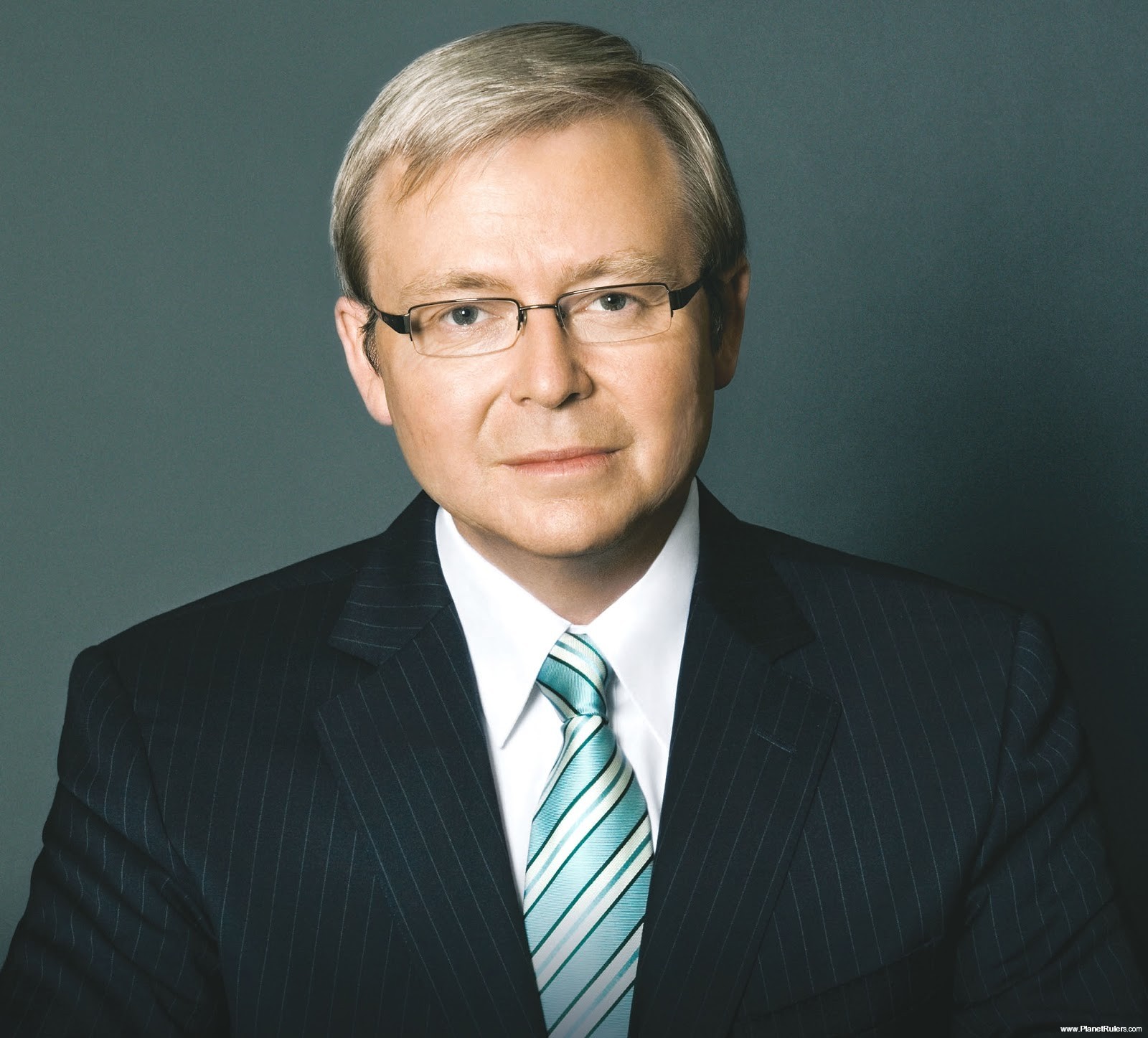
Kevin Rudd, Former Prime Minister of Australia (sworn in on Jun 27, 2013)
Kevin Rudd (born Sep 21, 1957) served as Australia’s 26th Prime Minister between 2007-2010 and subsequently as Australia’s Foreign Minister from 2010 until 2012. Mr Rudd was elected as Leader of the Labor Party in 2006 and was only the third Labor leader to win government from opposition since World War II. As Prime Minister, Mr Rudd led Australia’s response during the Global Financial Crisis. Australia was the only major advanced economy not to go into recession, in large part because of the Australian Government’s policy response which the OECD/IMF assessed as one of the most effective in the world.
Mr Rudd is internationally recognised as one of the founders of the G20, the premier global economic decision-making institution. He is recognised as a major driving force behind the 2010 decision to expand the East Asia Summit to include the United States in this important regional institution. This was a major step forward to realising his longer term vision for an Asia Pacific Community which he first proposed in 2008. As Prime Minister and Foreign Minister, Mr Rudd also oversaw the doubling of Australian foreign aid over five years, making Australia the seventh largest aid donor in the world.
Mr Rudd remains engaged in major international challenges including global economic management, the rise of China, and the global challenge of sustainable development. He was a co-author of the 2012 report of the United Nations Secretary General’s High Level Panel on Global Sustainability – “Resilient People, Resilient Planet”. Nationally, he remains deeply engaged on the questions of Australia’s strategic and economic future in Asia, aboriginal reconciliation, the teaching of Asian languages, homelessness and organ donation.
Personal Life
In 1981, Rudd married Thérèse Rein whom he had met at a gathering of the Australian Student Christian Movement during his university years. Both were residents at Burgmann College during their first year of university. Rudd and Rein have three children: Jessica (born 1984), Nicholas (born 1986), and Marcus (born 1993), and one granddaughter, Josephine (born 2012); Josephine is the daughter of Jessica and her husband Albert Tse, whom she married in 2007.
Daughter Jessica is a former solicitor, former campaign worker, and former PR consultant and is currently a writer. She earned a Bachelor of Arts (Political Science) and Bachelor of Laws at university. Hong Kong-born, Cantonese-speaking son-in-law Albert Tse has been reported as having been, or being, a solicitor and banker at Bankwest. Tse was educated at Anglican Church Grammar School and then the Queensland University of Technology (QUT), where he graduated with a Bachelor of Commerce and Bachelor of Laws and was the president of the QUT Labor Club. Both are on the board of the Rudd Foundation.
Elder son Nicholas married Zara Shafruddin, whom he had met at his sister’s wedding, on 14 April 2012 at St James’ Church, Sydney. Both are Griffith University-educated solicitors at the Sydney branch of the law firm Clayton Utz. Nicholas proposed to Zara in Prague three years earlier. Younger son Marcus has completed secondary education and, like his elder brother, has studied Mandarin. Rudd’s nephew Van Thanh Rudd is a Melbourne-based artist and activist.
Health
In 1993, Rudd underwent a cardiac valve transplant operation (Ross procedure), receiving a cadaveric aortic valve replacement for rheumatic heart disease. In 2011, Rudd underwent a second cardiac valve transplant operation, making a full recovery from the surgery.
Source: http://www.kevinruddmp.com/p/biography.html and Wikipedia
Julia Gillard, Former Prime Minister of Australia (since June 24, 2010)
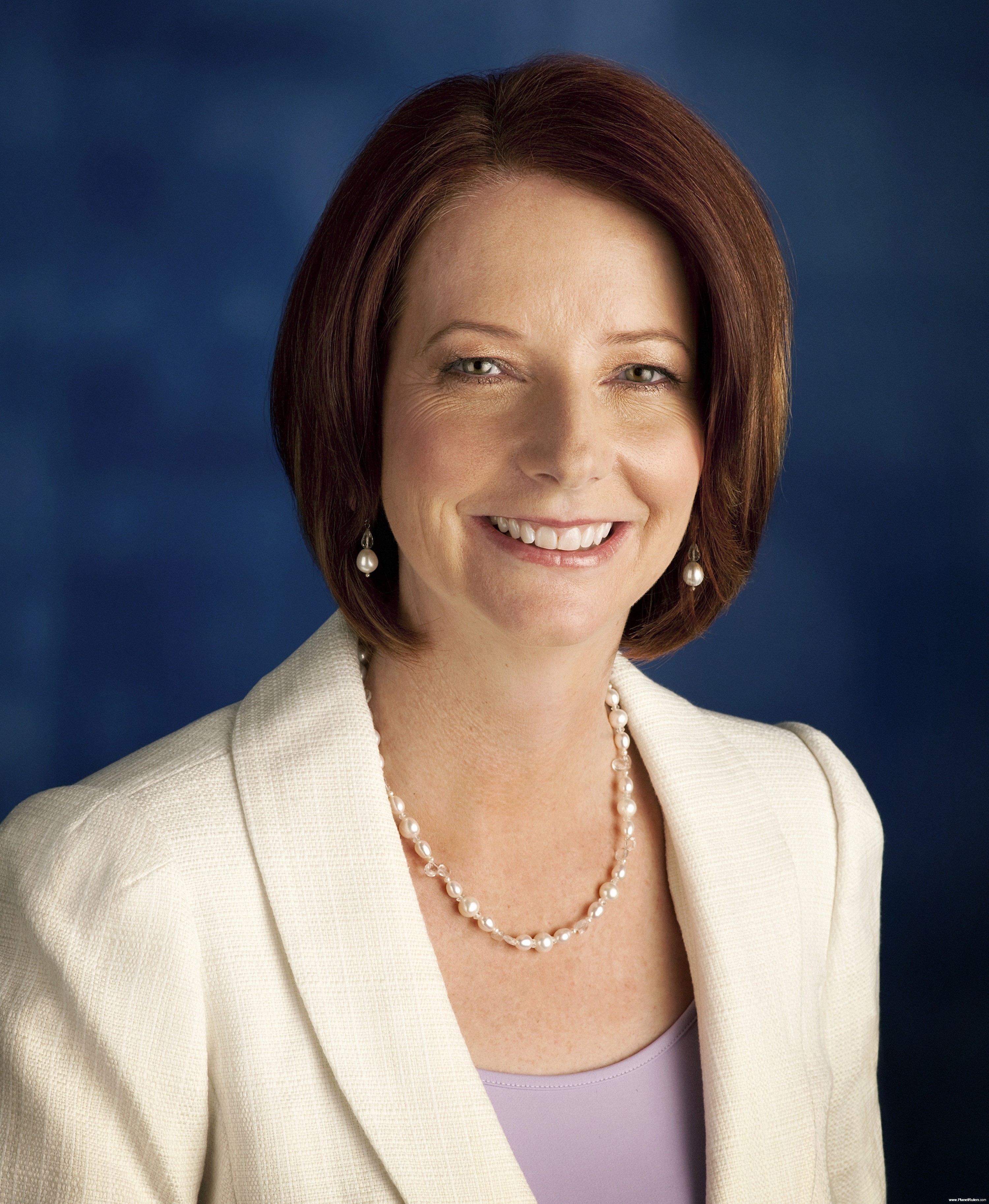
Julia was born in Wales, migrating to Australia with her family in 1966. She studied arts and law at university in Adelaide before being elected as national education vice president of the Australian Union of Students in 1983. In 1983, Julia was national president of the AUS.
She began work as a solicitor with the law firm Slater and Gordon and became a partner in 1990. In May 1996, Julia was appointed chief of staff of the then Victorian Opposition leader, John Brumby. Julia worked with Mr Brumby until her election to Federal Parliament in 1998.
Following her election, she was a member of a number of parliamentary committees including the House of Representatives Standing Committee on Employment, Education and Workplace Relations prior to entering Labor’s Shadow Ministry in 2001.
She subsequently served in a number of Shadow Ministerial portfolios including Population and Immigration, Reconciliation and Indigenous Affairs, Health, Employment and Industrial Relations, and Social Inclusion.
Julia was Labor’s Manager of Opposition Business for three years prior to being elected as Labor’s Deputy Leader in December 2006.
Following the Federal Election on the 24th of November 2007, Julia was sworn in as Deputy Prime Minister and Minister for Education, Minister for Employment and Workplace Relations, and Minister for Social Inclusion.
Julia Gillard was sworn is as Prime Minister of Australia on 24th June 2010.