Ahmed Mohamed Silanyo, President of Somaliland (since Jul 26, 2010)

Ahmed Mohamed Silanyo, President of Somaliland (since Jul 26, 2010)

Ahmed Mohamed Silanyo, President of Somaliland (since Jul 26, 2010)

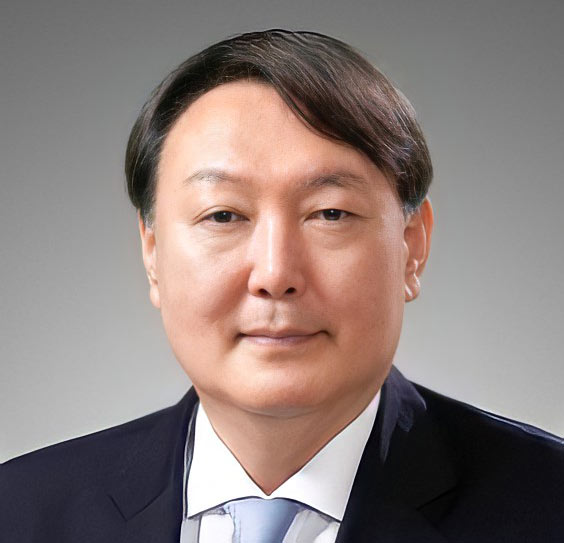
Ahmed Mohamed Mahamoud “Silanyo” (Somali: Axmed Maxamed Maxamuud “Siilaanyo”, Arabic: احمد محمد محمود سيلانيو‎) is a Somali politician. He is the current Chairman of the Peace, Unity and Development Party (Kulmiye) political party and President of Somaliland, a self-proclaimed republic internationally recognized as an autonomous region in Somalia. Standing as an opposition candidate, Silanyo was elected as President during the June 2010 presidential election.

Silanyo hails from the Habar Jeclo sub-clan of the Isaaq major clan. From 1946 to 1957, he attended the secondary schools in the towns of Sheekh and Amud in northwestern Somalia. He passed the advanced level GCE examinations in London, England, from 1958 to 1960. He then attended college at the University of Manchester, and earned an Honors Bachelor’s Degree in Economics (1960-63). He completed his Master’s Degree in Economics from the University of Manchester in 1966.
Continue reading President of Somaliland

Dési Bouterse, President of Suriname (since Aug 3, 2010)

Dési Bouterse, President of Suriname

Dési Bouterse, President of Suriname

Desiré Delano Bouterse (born 13 October 1945) is a Surinamese politician. As an army officer, he was the de facto leader of Suriname through most of the 1980s, serving as Chairman of the National Military Council. He lead the National Democratic Party (Nationale Democratische Partij, NDP). On July 19, 2010, Bouterse was elected the new President of Suriname taking office on August 3.

Born in Paramaribo District, Bouterse grew up in Suriname. He attended the Middelbare Handelsschool and acquired the MULO diploma (roughly equivalent to junior secondary general education). He received his military education in the Netherlands.

Military and political career

Bouterse’s name is closely bound with the military regime that controlled Suriname from 1980 until the beginning of the 1990s. On 25 February 1980, the government of newly-independent Suriname underwent a military coup which declared the country to be a Socialist Republic and Bouterse became Chairman of the National Military Council. Though the Suriname Presidency was retained, Bouterse was the nation’s de facto ruler until his resignation in 1988. He served briefly as president himself for a period in 1982.

Bouterse was a leading figure in Suriname’s post-independence civil war, and is responsible for the infamous “December murders” of 1982 and events in the Maroon village of Moiwana in 1986. Since then he has been accused on various occasions of involvement in illegal drug trafficking. In July 1999, he was convicted in absentia in the Netherlands for cocaine trafficking. The Netherlands has an international warrant for his arrest, which makes it almost impossible for him to leave Suriname. Suriname cannot extradite him because he is a former head of state. (more…)

Bronisław Komorowski, President of the Republic of Poland (since July 4, 2010)

Bronisław Komorowski, President of the Republic of Poland

Bronisław Komorowski, President of the Republic of Poland

After President of Poland, Lech Kaczynski, was killed in a plane crush on April 10, 2010, the marshal of the Sejm (Polish Parliament), Bronislaw Komorowski, became Acting President.

Bronislaw Komorowski was born on June 4, 1952 in Oborniki Slaskie, near Wroclaw, a family with strong traditions of independence and landowners.

In Communist times he was involved in opposition activities. Even as a high school student he took part in the demonstrations, including during the March events in 1968. The first time he was arrested was in December 1971.

During many years of underground activity, he was repeatedly arrested and victimized. Since September 1982 he was editor of the independent, underground magazine “ABC” (Adriatic Sea – Baltic Sea – Black Sea). The letter dealt with the problems of Eastern and Central European countries.

In 1977 he married Anne Dembowska. Bronislaw Komorowski has five children: Sophia, Tadeusz, Maria, Peter and Elizabeth.

In 1980-1981 he worked at the Centre for Social Research Solidarity Mazowsze Region. In the period of martial law and later, until 1989, he was a teacher in a seminary in the lower Niepokalanow, where he taught history. (more…)

Benigno S. Aquino III, President of Philippines (since June 30, 2010)

Benigno S. Aquino III, President of Philippines

Benigno S. Aquino III, President of Philippines

Benigno Simeon Cojuangco Aquino III (born February 8, 1960) also known as Noynoy Aquino is the fifteenth President of the Philippines and is concurrently the Secretary of the Department of the Interior and Local Government.

Aquino is a fourth-generation politician: his great-grandfather, Servillano “Mianong” Aquino, served as a delegate to the Malolos Congress; his grandfather, Benigno Aquino, Sr., held several legislative positions from 1919–44; and his parents were former President Corazon Aquino and former Senator Benigno “Ninoy” Aquino, Jr. Aquino is a member of the Liberal Party.

Born in Manila, Aquino graduated from Ateneo de Manila University in 1981 and joined his family in their exile in the United States shortly thereafter. He returned to the Philippines in 1983 shortly after the assassination of his father and held several positions working in the private sector. In 1998, he was elected to the House of Representatives as Representative of the 2nd district of Tarlac province. He was subsequently re-elected to the House in 2001 and 2004. In 2007, having been barred from running for re-election to the House due to the term limit, he was elected to the Senate in the 14th Congress of the Philippines. (more…)

Pál Schmitt, President of Hungary (since JUne 29, 2010)

Pál Schmitt, President of Hungary

Pál Schmitt, President of Hungary

Pál Schmitt (born 13 May 1942 in Budapest) is a Hungarian politician, former Speaker of the National Assembly of Hungary from 14 May 2010. He was elected as President of Hungary in a 263 to 59 vote in the Parliament of Hungary on June 29, 2010 and takes office on August 5, 2010.

Schmitt was elected in the 2009 elections as a Member of the European Parliament with the Fidesz – Hungarian Civic Union, to the Bureau of the European People’s Party and was vice-chair of the European Parliament’s Committee on Culture and Education. Schmitt was also elected as the Vice President of the European Parliament , a post where he was succeeded by László Tőkés.

Schmitt chairs the Delegation to the EU-Croatia Joint Parliamentary Committee. On July 14, 2009 he was elected one of the 14 Vice-Presidents of the European Parliament.

He is also a sportsman, won team épée gold medal at the Games of the XIX. Olympiad in Mexico (1968) and the XX. Olympiad in Munich (1972). He is the Chief of Protocol of the International Olympic Committee (IOC) and presided the World Olympians Association between 1999 and 2007.

Julia Gillard, Prime Minister of Australia (since June 24, 2010)

Julia Gillard, Prime Minister of Australia

Julia Gillard, Prime Minister of Australia

Julia was born in Wales, migrating to Australia with her family in 1966. She studied arts and law at university in Adelaide before being elected as national education vice president of the Australian Union of Students in 1983. In 1983, Julia was national president of the AUS.

She began work as a solicitor with the law firm Slater and Gordon and became a partner in 1990. In May 1996, Julia was appointed chief of staff of the then Victorian Opposition leader, John Brumby. Julia worked with Mr Brumby until her election to Federal Parliament in 1998.

Following her election, she was a member of a number of parliamentary committees including the House of Representatives Standing Committee on Employment, Education and Workplace Relations prior to entering Labor’s Shadow Ministry in 2001.

She subsequently served in a number of Shadow Ministerial portfolios including Population and Immigration, Reconciliation and Indigenous Affairs, Health, Employment and Industrial Relations, and Social Inclusion.
Julia was Labor’s Manager of Opposition Business for three years prior to being elected as Labor’s Deputy Leader in December 2006.

Following the Federal Election on the 24th of November 2007, Julia was sworn in as Deputy Prime Minister and Minister for Education, Minister for Employment and Workplace Relations, and Minister for Social Inclusion.

Julia Gillard was sworn is as Prime Minister of Australia on 24th June 2010.